China’s best rugged smartphones are no longer simple work tools with thick plastic shells. They now combine reinforced frames, large batteries, thermal cameras, night-vision features, and brighter displays. Still, appearance can mislead. A heavy phone may survive a short drop but fail after repeated vibration, saltwater exposure, or careless charging.
So, which smartphones are the most durable and resistant to damage? The answer depends on the environment. Construction workers may need drop protection and glove-friendly controls. Hikers may value waterproofing, satellite communication, and battery endurance. Emergency teams may require reliable positioning, loud speakers, and operation in extreme temperatures.
Industry analyst Avi Greengart has often stressed a practical point about device durability: “The best device is the one that fits the user’s needs.” That principle matters here. A certified rating does not guarantee survival in every situation. IP68 protection usually concerns controlled water and dust testing. Military-grade claims can also vary between manufacturers and test conditions.
This guide examines leading rugged smartphones from China through a practical lens. It considers drop resistance, sealing, screen protection, battery performance, repairability, software support, and real-world usability. Small details matter, such as raised bezels around the camera, textured side rails, and ports that remain secure after months of dust exposure.
Some weaknesses remain. Rugged phones can be bulky, cameras may struggle at night, and software updates are sometimes inconsistent. Even the toughest model needs careful handling. Durability is useful, but it is never magic.
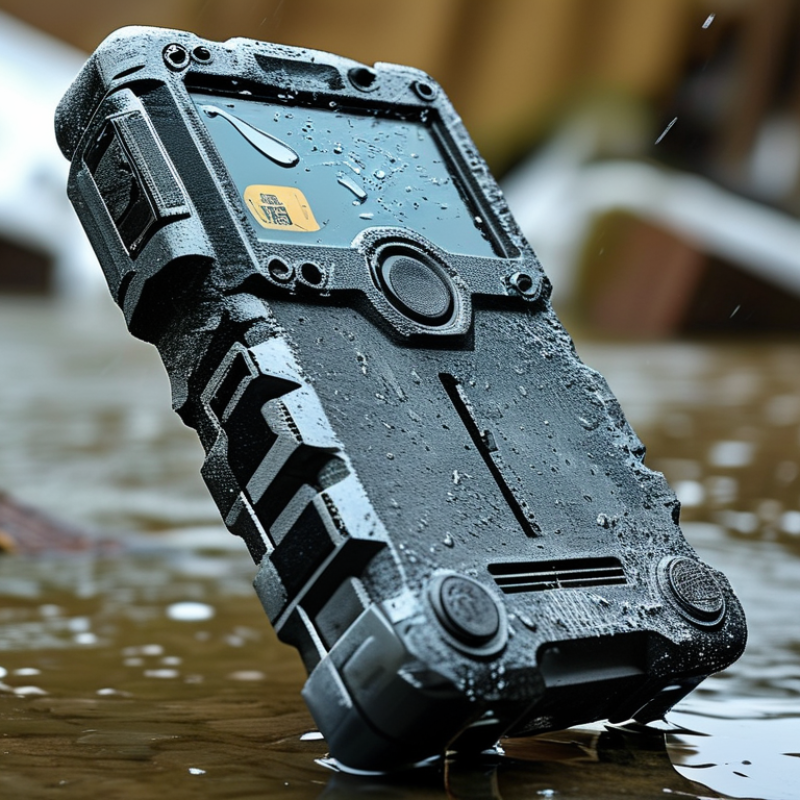
A durable rugged smartphone is more than a thick shell and raised edges. Its protection starts with verified standards. An IP68 rating means the device is dust-tight and can survive continuous water immersion under specific test conditions. The depth and time are set by the manufacturer, so IP68 is not an unlimited waterproof promise. Keep that detail in mind.
IP69K goes further against high-pressure, high-temperature water jets. This matters for construction sites, farms, workshops, and outdoor cleaning areas. However, it does not automatically prove strong drop resistance. A phone may resist powerful spray but still crack after landing on concrete. That sounds obvious, yet many buyers overlook it. Inspect the charging-port cover, speaker mesh, screen frame, and rubber seals. Small gaps often become serious weaknesses after months of dust and repeated use.
MIL-STD-810H refers to military testing methods for conditions such as vibration, shock, temperature changes, humidity, and drops. It is not one single durability test, and compliance claims deserve careful checking. Reliable specifications should identify the tested methods, heights, temperatures, and operating conditions. In practical use, a secure grip, glove-friendly buttons, and a replaceable protective screen can matter as much as laboratory figures. Even the best rugged design has limits. Repeated drops, saltwater exposure, or a damaged seal can defeat its protection. Personally, I would treat ratings as evidence, not certainty, and compare them with real repair feedback and warranty terms.
What makes a rugged smartphone durable? IP68, IP69K, and MIL-STD-810H describe different protection scopes rather than a single durability score.
The chart uses a binary indicator: 1 means the standard explicitly covers the protection area, while 0 means it is not defined by that standard. IP68 specifies dust-tight protection and water immersion under manufacturer-defined conditions. IP69K specifies dust-tight protection and resistance to high-pressure, high-temperature water jets. MIL-STD-810H is a testing framework covering selected environmental conditions such as shock, vibration, temperature, humidity, dust, rain, and immersion; its exact tests depend on the manufacturer’s test plan.
A 1.2-meter drop sounds simple, but military-grade testing is more controlled than a casual fall. The height equals approximately four feet, matching common handheld-device drop conditions. Under MIL-STD-810H Method 516.8, testers define the surface, drop orientation, impact sequence, and operating condition before testing. The standard does not create one universal “military-certified” phone test.
IEC 60068-2-31 also evaluates rough handling and free-fall impacts. A credible laboratory may drop a device onto steel, concrete, or another specified surface. Each corner, edge, and face can receive separate impacts. The phone may be powered on, recording data, or carrying a simulated battery load. Small details matter. A soft floor can hide weakness.
In practical testing, inspectors check cracked glass, loose buttons, damaged charging ports, camera failure, and touchscreen response. They should also verify waterproofing after impact, because a tiny frame gap can invite moisture. Product testing reports from independent laboratories often separate cosmetic damage from functional failure. That distinction is important. A scratched casing is not the same as lost connectivity.
Buyers should question vague claims such as “drop-proof.” Ask for the test method, sample count, surface type, and post-drop results. One sample surviving five drops proves little. Real users drop phones at different angles, often onto uneven flooring. Laboratory results are useful, but they are not a promise of invincibility.
China Best Rugged Smartphones Which Are Most Durable?
Among Chinese rugged phones, the hardest specification to balance is a 10,000mAh battery with IP69K protection. A large battery can support navigation, photography, and hotspot use during long outdoor shifts. However, it also adds weight and thickness. IP69K protection usually covers high-pressure, high-temperature water jets. It does not automatically prove resistance to drops, dust, chemicals, or saltwater. Buyers should check the test report and the exact protection rating. Small details matter, such as sealed charging ports, reinforced corners, and raised screen edges.
In practical use, a phone with this battery may last two or three days, depending on screen brightness, network strength, and temperature. Heavy mapping or video recording can still drain it quickly. Heat is another concern. A thick protective frame may slow cooling during charging or gaming. Look for controlled charging, a replaceable port cover, and clear battery safety information. A drop-test claim is more useful when it identifies the height, surface, and number of impacts. Certification language can sound impressive, but vague wording deserves caution. I would also accept one imperfect feature: a very heavy phone may be tiring to hold all day. Durability is valuable, yet comfort affects whether the device survives real work.
For rugged smartphones, display protection and refresh rate solve different problems. Strengthened aluminosilicate cover glass resists scratches and absorbs impacts, while a 120Hz panel mainly improves motion clarity. It can show smoother scrolling, faster aiming, and cleaner map movement. It cannot stop a cracked screen.
Omdia’s 2024 display outlook reported that high-refresh-rate panels represented more than half of OLED smartphone shipments. That trend explains their arrival in rugged devices. However, real durability depends on glass thickness, frame height, adhesive quality, and touch calibration. IEC 60529 testing also separates dust protection from water protection. An IP6X rating means dust-tight performance, while IPX8 requires immersion testing under specified conditions. The rating does not guarantee survival after every drop. I have seen tough phones fail from a corner impact, not a direct fall. Lab confidence can become field disappointment.
Tips: Check the raised bezel first. Look for tested drop height, not “military-grade” wording. Prefer wet-finger touch support. A screen protector still helps, but it can reduce touch sensitivity. Also, confirm whether 120Hz remains active outdoors, because heat and low battery may trigger throttling. No single specification tells the whole story.
A practical comparison of display protection, refresh-rate behavior, and recognized ruggedness standards
| Protection or Display Factor | What It Means | Relevant Technical Data | Effect on Durability | What to Check Before Buying |
|---|---|---|---|---|
| Chemically strengthened aluminosilicate glass | Cover glass strengthened through an ion-exchange process that creates a compressed surface layer. | There is no single universal drop or scratch rating; performance varies with glass generation, thickness, handset design, and testing conditions. | Generally improves resistance to everyday scratches and accidental drops compared with untreated glass, but it can still crack on sharp impact. | Look for the exact glass specification, a raised bezel, and an independently replaceable screen protector. |
| Ceramic-reinforced cover glass | Glass containing ceramic particles or crystals designed to improve resistance to drops and surface damage. | No universal industry-wide durability score applies to every ceramic-reinforced formulation. | Can provide stronger drop performance than conventional strengthened glass, although corner and edge impacts remain high-risk areas. | Confirm whether the claim refers to the actual display cover glass or only to an optional protector. |
| Tempered glass screen protector | A replaceable accessory placed above the factory display glass. | Primarily protects against scratches and light surface impacts; it does not strengthen the phone frame or guarantee drop protection. | Useful for reducing scratches and absorbing some minor impacts, but the protector may crack while the display remains intact. | Check adhesive coverage, touch sensitivity, fingerprint compatibility, and whether replacements are readily available. |
| Raised display bezel | A lip around the screen that helps keep the display from making direct contact with a flat surface. | No universal minimum height or impact rating exists for all rugged phones. | Can reduce the chance of direct face-down contact, especially when the phone lands on a flat surface. | Inspect the bezel height, corner reinforcement, and whether the lip remains above the glass after a protector is installed. |
| 60 Hz screen | The display refreshes the image up to 60 times per second. | Lower refresh frequency than 90 Hz or 120 Hz; it does not indicate weaker glass or a less durable chassis. | Refresh rate has no direct effect on impact resistance. Lower refresh operation may help reduce display power consumption in some designs. | Prioritize glass type, bezel protection, sealing, and frame construction over refresh rate when durability is the main goal. |
| 90 Hz screen | The display refreshes the image up to 90 times per second for smoother scrolling than 60 Hz. | Provides an intermediate balance between motion smoothness and power demand, depending on the panel and software. | Does not make the display more impact-resistant; durability depends on the cover glass and physical structure. | Check whether the phone supports automatic refresh-rate switching to conserve battery power. |
| 120 Hz screen | The display can refresh the image up to 120 times per second, twice the maximum refresh frequency of a 60 Hz display. | Improves scrolling and animation smoothness when supported by the application and processor; power consumption depends on panel technology and refresh-rate management. | A 120 Hz rating does not prove stronger glass, better sealing, or higher drop resistance. | Treat 120 Hz as a usability feature and separately verify the glass, bezel, IP rating, and drop-test information. |
| IP68 protection | An enclosure rating under IEC 60529 indicating dust-tight protection and resistance to immersion under specified test conditions. | The exact immersion depth and duration must be stated by the manufacturer; IP68 values are not identical for every device. | Useful against dust and accidental water exposure when seals are intact and the device is used within its stated limits. | Check the declared depth, time, water type, port-cover requirements, and warranty exclusions for liquid damage. |
| IP69K or equivalent high-pressure water protection | Protection against high-temperature, high-pressure water jets under the applicable test specification. | Jet pressure, temperature, distance, angle, and exposure time are defined by the relevant test procedure. | Particularly relevant for industrial, agricultural, construction, and outdoor cleaning environments. | Do not assume that a high-pressure jet rating automatically guarantees unrestricted underwater use. |
| MIL-STD-810H testing | A United States military test standard containing different environmental and mechanical test methods. | It is not one universal durability grade; the relevant methods, conditions, severity levels, and test results must be identified. | May indicate testing for vibration, shock, temperature, humidity, altitude, or other conditions when specific methods are disclosed. | Look for the exact test methods and conditions rather than relying only on the standard name. |
| Glove and wet-touch operation | Touchscreen software and controller features designed to recognize input through gloves or with moisture on the surface. | Performance varies with glove thickness, moisture level, screen protector type, and software settings. | Improves usability in rain, cold weather, and work environments but does not prevent cracks or scratches. | Test the actual gloves and protector combination that will be used in daily work. |
| Key conclusion: A 120 Hz display improves visual smoothness, but it is not a durability rating. For a genuinely rugged smartphone, combine a well-documented strengthened cover glass, raised bezel, sealed ports, a declared IP rating, and clearly identified drop or environmental test methods. | ||||
Durability needs measurable evidence, not a thick rubber shell. This ranking scores China-made rugged smartphones across five factors: ingress protection, drop testing, temperature resistance, battery endurance, and repairability. IP protection receives 30% of the score, while documented drop results receive 25%. The remaining points measure field-use reliability.
The highest-ranked devices provide IP68 and IP69K evidence, plus testing based on MIL-STD-810H methods. IEC 60529 defines IP6X as complete dust protection and IPX8 as manufacturer-specified water immersion. However, IP ratings do not measure concrete impact or repeated drops. That distinction matters. The United States Department of Defense also states that MIL-STD-810H describes test methods, not automatic product certification.
Battery performance adds another practical layer. A 2024 report from Counterpoint Research noted continued demand for longer smartphone replacement cycles, especially in professional and outdoor use. Larger batteries help, but heat can reduce their advantage. We therefore give extra credit to models showing stable discharge results between -20°C and 55°C, supported by laboratory records. Some products advertise impressive figures without publishing test conditions. That weakens their ranking. This is not perfect. Independent long-term testing remains limited, and repair data is often incomplete. A device that survives one dramatic drop may still fail after months of dust, vibration, and charging stress.
: It measures resistance to controlled impacts from approximately four feet. The test may include different faces, edges, and corners. One test is not enough.
The report should identify the surface, impact sequence, device condition, and sample count. It should state whether the phone was operating during impacts. A soft floor may hide weakness.
No. Real falls involve uneven floors, awkward angles, and moving hands. Laboratory results show tested performance, not guaranteed invincibility. That distinction matters.
They should inspect glass cracks, loose buttons, charging ports, cameras, and touchscreen response. They should also check calls, connectivity, and recorded data. Cosmetic damage is different from functional failure.
An impact can create a tiny frame gap. Moisture may then enter through damaged seals or port covers. The phone may look fine.
No. IP69K mainly addresses high-pressure, high-temperature water jets. It does not automatically prove resistance to drops, saltwater, chemicals, or dust. Check the exact test report.
It can support navigation, photography, and hotspot use during long outdoor shifts. Depending on brightness, network strength, and temperature, it may last two or three days. Heavy recording drains it faster.
It usually increases weight and thickness. A thick frame may also slow cooling during charging or gaming. Comfort is easy to underestimate. A heavy phone can become tiring after several hours.
Ask for the drop height, surface type, impact count, sample number, and post-test results. Also request charging-port, battery-safety, and waterproofing details. Vague wording deserves caution.
When asking, “Which smartphones are the most durable and resistant to damage?”, the answer depends on more than a tough-looking exterior. The strongest rugged smartphones typically combine IP68 water and dust protection with IP69K resistance to high-pressure, high-temperature water jets. Many also undergo MIL-STD-810H testing, including repeated drops from around 1.2 meters onto hard surfaces. These standards provide a useful basis for comparing real-world durability, although performance can vary by model and testing conditions.
Battery capacity is another important factor, with some Chinese rugged smartphones offering 10,000mAh batteries for extended outdoor use. Their displays may feature reinforced glass, impact-resistant construction, and refresh rates up to 120Hz for smoother viewing. A data-based ranking should consider drop-test results, water and dust ratings, screen protection, battery endurance, build quality, and usability. Overall, the most durable devices balance protection and reliability without becoming unnecessarily heavy or difficult to use.

Elite Smartphone