In today's fast-paced world, the choice between a regular tablet and a rugged tablet becomes crucial for various professionals. Organizations operating in tough environments often raise the question: "Why should you choose a rugged tablet over a regular tablet?" Industry expert Jane Smith, a leading voice in mobile technology, emphasizes, "Rugged tablets are vital for durability and efficiency in demanding settings."
These devices are built to withstand extreme conditions. They resist drops, dust, and water, making them reliable companions for construction sites, outdoor work, or any heavy-duty application. Regular tablets may offer sleek designs, but they cannot match the reinforced exteriors of rugged models.
The conversation extends beyond durability. Rugged tablets often feature better battery life and specialized functionalities. They are designed to perform where regular devices fail. Choosing one is essential for professionals who rely on technology to perform critical tasks seamlessly. While regular tablets may be sufficient for casual use, those in demanding environments must consider the real benefits of rugged devices. These options not only enhance productivity but also reduce the risk of equipment damage, saving costs in the long run.
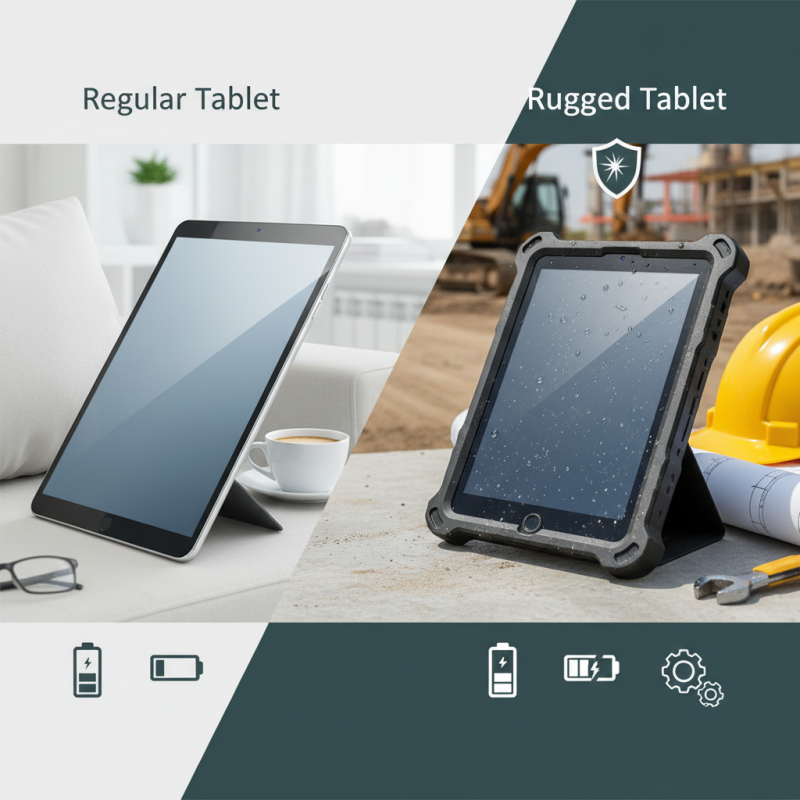
Rugged tablets stand out in performance and durability. They are specifically designed for harsh environments. These devices typically meet military standards for protection. In fact, studies show that rugged tablets can endure drops from a height of 1.2 meters and operate in extreme temperatures ranging from -20°C to 60°C. Their screen is often made from reinforced glass, providing resistance to scratches and impacts.
When it comes to features, rugged tablets often include enhanced battery life. Many models offer up to 15 hours of continuous use. This is essential for professionals working in the field, such as construction or emergency services. They may have advanced connectivity options like 4G LTE, ensuring reliable access in remote areas. Notably, rugged devices often come equipped with customizable ports. This flexibility allows users to connect various peripherals for specific needs.
Rugged tablets also address usability challenges. Some models feature gloves-on touch technology, enhancing user experience in cold or wet conditions. However, they can be bulkier and heavier than regular tablets. This aspect may deter users who prioritize portability. Additionally, while rugged tablets provide expanded functionality, their higher price tag can be a barrier. With proper assessment, these devices can meet diverse needs.
When deciding between rugged tablets and regular tablets, durability is a critical factor. Rugged tablets are built to withstand harsh environments. They often feature reinforced screens and cases that resist drops, dust, and moisture. On construction sites or outdoor jobs, regular tablets risk damage far too easily. A rugged tablet can survive a fall from several feet, while a typical device may shatter.
Rugged tablets typically meet military standards for toughness. This means they can handle extreme temperatures and humidity levels. For professionals in demanding fields, a rugged device offers peace of mind. However, they are often heavier and bulkier. Some users may find this cumbersome. Balancing portability and robustness can be a challenge.
Not every rugged tablet is flawless. Some may have limited processing power compared to regular tablets. Users should assess their specific needs carefully. While rugged tablets offer strength, they sometimes compromise on speed and functionality. In the end, determining the right choice depends on which features align best with your lifestyle and work environment.
When considering the needs of various industries, performance specifications become paramount.
Rugged tablets offer unique benefits tailored for challenging environments. These devices are designed to withstand harsh conditions, such as extreme temperatures, moisture, and dust.
For example, construction workers benefit from tablets that endure falls and vibrations.
In fields like healthcare, reliability in performance is critical.
Rugged tablets are equipped with high-definition displays, ensuring visibility in bright environments. Their long battery life supports extended use without interruptions.
Features like mobile data connectivity enhance the ability to access critical information on-site. These specifications empower professionals to perform their tasks efficiently and effectively.
However, choosing a rugged tablet requires careful consideration. It is essential to assess the specific requirements of your industry.
For some, the added durability may not justify the cost. Others might find that the lightweight design of regular tablets suffices for their needs.
Balancing performance and practicality is key.
Understanding the intended use can guide you toward the right choice.
In harsh environments, the choice of a rugged tablet can significantly impact productivity. Regular tablets, while often less expensive, may struggle to perform where dust, moisture, or extreme temperatures are present. Rugged tablets, however, are built for resilience. They feature reinforced screens and durable casings. These devices can withstand drops and spills, making them reliable for field work.
The cost-effectiveness of rugged tablets becomes apparent over time. Repairing a regular tablet after a drop can result in high costs. On the other hand, rugged devices may have a higher upfront cost. Yet, their longevity and reduced need for repairs offset this initial expense. Consider the value of uninterrupted work compared to the potential losses from downtime due to device failures.
Despite being more durable, rugged tablets aren't perfect. They are heavier and bulkier, which might affect portability. Battery life may not compare favorably with regular tablets. Reflecting on user experiences reveals both challenges and advantages. It’s essential to assess specific needs carefully before investing in rugged technology.
When assessing rugged tablets, battery life is crucial. Regular tablets often struggle in demanding environments. They may need frequent charging. Out in the field, this is impractical and frustrating. Rugged tablets are designed with longer battery life in mind. They can last an entire workday or more under heavy use. This capability is essential for professionals in construction, outdoor activities, or emergency services.
Connectivity options also set rugged tablets apart. Many rugged models come with enhanced connectivity features. They often include options like LTE support or advanced Wi-Fi capabilities. This ensures reliable communication in remote areas. Regular tablets may not have the same range of connectivity. Some may even struggle in environments with weak signals. This limitation can hinder productivity. Rugged tablets provide better reliability for those who need to stay connected.
Users must weigh these factors carefully. Battery longevity is not just about convenience; it affects safety in critical situations. Connectivity can make or break a task in isolated locations. Real-world needs often reflect the importance of these features. Making the right choice can significantly impact your daily operations and outcomes.
: Rugged tablets are designed for harsh environments and meet military protection standards.
They can endure drops from 1.2 meters and resist scratches due to reinforced glass screens.
Many rugged tablets offer up to 15 hours of continuous use for field professionals.
Yes, they often include advanced connectivity options like 4G LTE for reliable access.
Some models feature gloves-on touch technology, but they may be bulkier and heavier.
Higher prices and added weight might deter those who prefer lighter devices.
They are built to withstand dust and moisture, making them reliable for field work.
It's crucial to assess specific industry requirements and balance performance with practicality.
They are not perfect; regular tablets may suffice for some users, depending on needs.
They can be heavier and bulkier, which might affect portability for some users.
When considering the question, "Why should you choose a rugged tablet over a regular tablet?" it is essential to understand the unique features and benefits that rugged tablets offer. These devices are specifically designed to withstand harsh environments, boasting superior durability compared to regular tablets. They often come with enhanced performance specifications tailored to meet the needs of various industries, from fieldwork to manufacturing.
In addition to their robust construction, rugged tablets provide a compelling cost-effectiveness by reducing the risk of damage and downtime, ultimately saving resources in challenging operational settings. Furthermore, their extended battery life and reliable connectivity options ensure continuous functionality, making them a superior choice for users who require resilience and performance in demanding conditions.

Elite Smartphone