The transition from 4G to 5G technology marks a significant leap in smartphone capabilities. What are the main differences between 5G and 4G smartphones? Understanding these differences is crucial for consumers seeking high-performance devices.
5G smartphones offer faster download speeds and lower latency compared to their 4G counterparts. This means quicker loading times for apps and smoother streaming of high-definition content. Users will experience less buffering and interruptions, enhancing daily phone usage. However, not all regions have fully implemented 5G, which raises questions about the availability and practicality of these devices.
Moreover, 5G smartphones have advanced features like improved connectivity with smart devices. They support a greater number of simultaneous connections, making them ideal for smart homes. Yet, some may find that the full benefits of 5G are not yet justified, especially if they do not rely heavily on data-intensive applications. Thus, a careful consideration of personal needs and local network capabilities is essential. It is important to weigh the advantages against potential limitations.
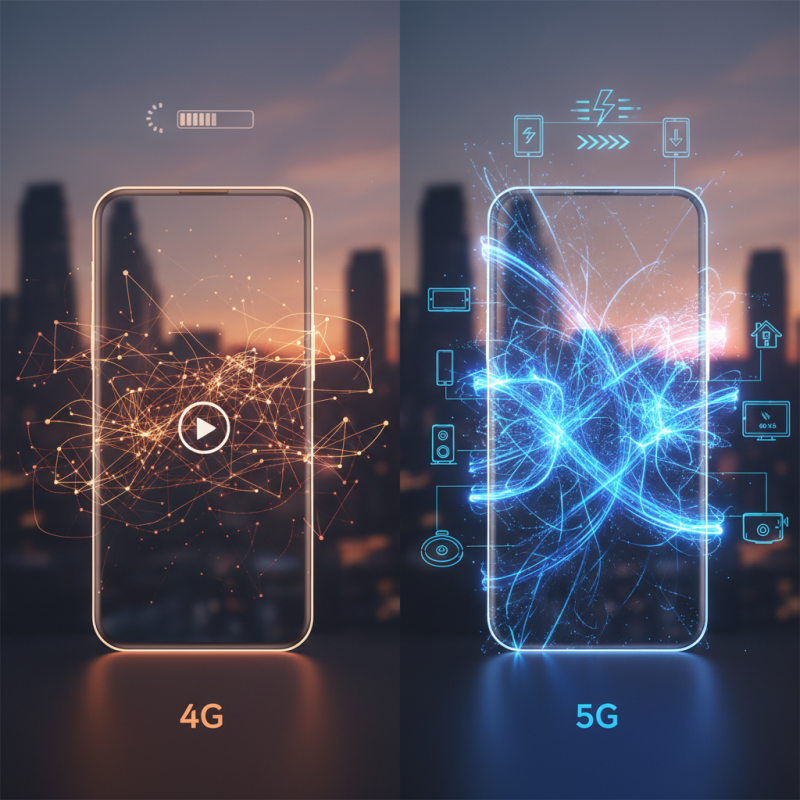
Overview of 4G and 5G Technologies
4G and 5G technologies represent significant advancements in mobile communication. 4G, often referred to as LTE, brought faster download speeds and improved connectivity. It supports high-definition streaming and mobile gaming effectively. However, its speed tops out at about 100 Mbps under ideal conditions. This is a limitation for users with increasing demands for data.
5G, on the other hand, promises up to 10 Gbps. This means you can download full-length movies in seconds. The technology utilizes higher frequency bands, resulting in more bandwidth and lower latency. This allows for real-time communication, essential for applications like augmented reality and autonomous vehicles. The overall user experience enhances dramatically with 5G.
Tips: Choose a 5G smartphone if you want the latest features. This ensures compatibility with future networks. Also, check your area’s 5G coverage before upgrading. Not all regions have robust 5G networks yet. Reliability is key; without strong coverage, you might not fully experience the benefits of 5G.
Key Hardware Specifications for 4G and 5G Smartphones
The transition from 4G to 5G smartphones brings notable hardware changes. The core of 5G devices often includes advanced processors, enabling faster data speeds. For example, 5G smartphones can achieve maximum download speeds of up to 10 Gbps, while 4G is limited to around 1 Gbps. This difference in speed can significantly enhance user experiences for video streaming and online gaming.
Another essential factor lies in modem technology. 5G devices typically feature integrated modems, which promote better power efficiency. On the other hand, 4G smartphones often rely on separate modem chips, which can consume more battery. According to industry reports, 5G smartphones can manage battery life better than their 4G counterparts. However, the higher energy demands of 5G connectivity can lead to inconsistent battery experiences, especially in areas with weak signal coverage.
Memory capacity and storage also play crucial roles. Many 5G smartphones come with a minimum of 8 GB of RAM and support for higher storage options. This enables tasks that demand higher computational power, like augmented reality applications. In contrast, 4G devices frequently feature 4 GB of RAM. This rapid evolution raises questions about the sustainability of production and electronic waste, highlighting the need for responsible choices in technology consumption.
Differences in Network Speed and Latency Between 4G and 5G
The differences in network speed and latency between 4G and 5G smartphones are significant. 5G technology offers speeds that are up to 100 times faster than 4G. While 4G typically delivers speeds between 5-100 Mbps, 5G can exceed 10 Gbps under optimal conditions. This immense speed enables seamless streaming of high-definition content and quicker downloads.
Latency is another crucial factor. 4G networks usually have a latency of around 30-50 milliseconds. In contrast, 5G can reduce this latency to as low as 1 millisecond. This difference is transformative for applications like gaming, where real-time feedback is essential. Imagine playing a live game without delay.
However, 5G's higher speeds and lower latency come with challenges. Coverage is still expanding, meaning not all areas have access to 5G. Consumers may find mixed results in urban versus rural locations. This inconsistency raises questions about the reliability of 5G connections. As technology evolves, these issues need addressing to ensure broader access to enhanced networking experiences.
Impact of 5G on Mobile Applications and Services
The rise of 5G technology is reshaping mobile applications and services in profound ways. With faster download speeds, users can enjoy seamless streaming and instant access to large files. Mobile gaming benefits tremendously, providing smoother graphics and reduced latency. This fosters a richer, more engaging experience for gamers.
However, the rollout of 5G also raises challenges. Many apps need updates to fully utilize new capabilities. Not all existing infrastructure can support the increased demands of 5G services. Developers face the pressure of adapting to users' expectations for speed and functionality. As people become accustomed to 5G, their patience for slower apps diminishes, leaving room for backlash.
Moreover, 5G's efficiency comes with questions about data security. Users must consider the implications of an interconnected world. The sheer volume of data transmitted raises concerns about privacy and protection. Balancing innovation with security is now more critical than ever in app development. As 5G evolves, so must our approach to these essential issues.
Battery Life and Efficiency Comparisons Between 4G and 5G Devices
Battery life is a crucial factor when comparing 5G and 4G smartphones. The enhanced speed and connectivity of 5G come at a cost. Users often find that 5G devices consume more power. While they can download large files quickly, this efficiency can drain batteries faster. Frequent 5G use may lead to shorter device usage throughout the day.
On the other hand, 4G devices typically offer longer battery life. They consume less energy because 4G networks are more established and optimized for efficiency. Users often report that their 4G phones last much longer on a single charge. However, as technology evolves, battery management systems improve. Some 5G smartphones incorporate advanced battery-saving features.
Still, transitioning to 5G might require adjustments. Users may need to charge their devices more frequently. Observing battery trends can lead to a better understanding of personal usage patterns. Monitoring data consumption is valuable, especially with 5G's vast capabilities. Ultimately, awareness of battery differences can help consumers make well-informed decisions.
Battery Life Comparison Between 4G and 5G Smartphones
FAQS
: 5G smartphones can achieve download speeds of up to 10 Gbps.
4G devices usually have longer battery life. They consume less energy overall.
5G smartphones often have integrated modems, improving power efficiency compared to 4G’s separate modem chips.
Yes, 5G connectivity can lead to higher energy demands, potentially causing short battery life in weak signal areas.
Faster 5G speeds enhance mobile gaming with smoother graphics and reduced latency, improving user experience.
Many existing apps require updates to utilize 5G's capabilities, which can pressure developers to adapt quickly.
5G increases data volume, raising concerns about privacy and protection in an interconnected world.
The rapid evolution to 5G raises sustainability questions and highlights the need for responsible tech consumption.
Yes, users may need to charge 5G devices more often due to higher power consumption patterns.
As users experience 5G’s speed, their tolerance for slower apps decreases, leading to potential backlash.
Conclusion
The article titled "What Are the Key Differences Between 5G and 4G Smartphones?" provides a comprehensive overview of the advancements from 4G to 5G technology. It highlights key differences in hardware specifications, emphasizing that 5G smartphones are designed with enhanced processing capabilities to support faster data transmission. The discussion on network speed and latency reveals that 5G networks significantly outperform 4G, offering lower latency and higher speeds, which are essential for applications that require real-time responsiveness.
Furthermore, the impact of 5G on mobile applications and services is explored, illustrating how it enables more sophisticated and bandwidth-intensive applications, ultimately transforming user experiences. The article also compares battery life and efficiency, noting that while 5G offers remarkable enhancements, it may pose challenges regarding battery usage compared to 4G devices. Overall, understanding "what are the main differences between 5G and 4G smartphones?" is crucial for consumers and developers alike, as it shapes the future of mobile technology.

 Elite Smartphone